Chic Pixel - cute and nerdy Japanese pop culture

Menu

Skip to content
  • about
    • product finding service
  • contact
  • portfolio
  • podcast
  • support

Author: Anne

Manga Mentions: MeruPuri

9 / 21 / 124 / 18 / 15

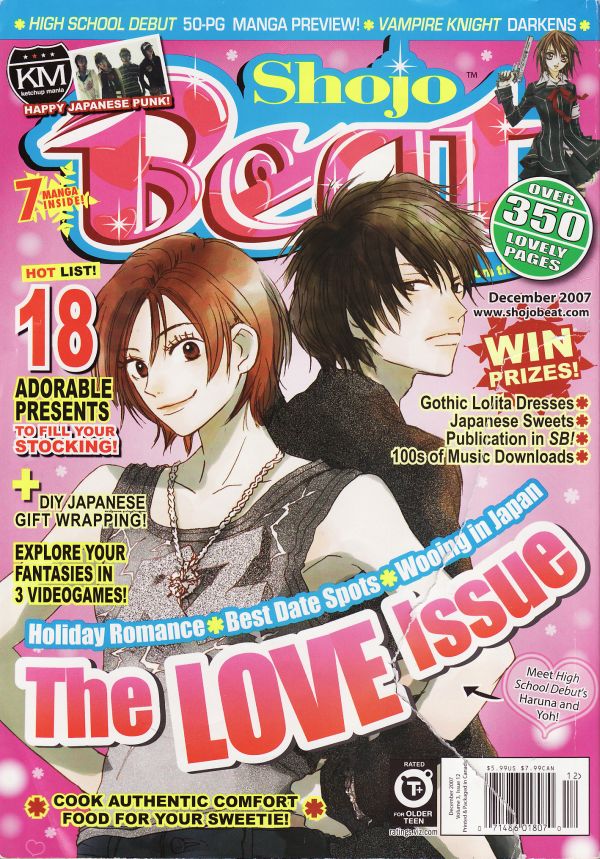
Ah, Shojo Beat. It may have started just as I was transitioning out of reading manga in English, and it may not have romanized the word “shōjo” properly, but it still holds a special place in my heart. I still remember when the first issues of the new manga magazine began to arrive at my high school’s library… I would devour each and every issue, though I barely followed the manga being serialized. There was just something so comforting knowing that there was a publication that felt like it was made just for me –– shōjo manga has always been my favorite type of manga, and the Japanese culture articles gave me a glimpse of the world I yearned to return to ever since I went abroad during my freshman year.
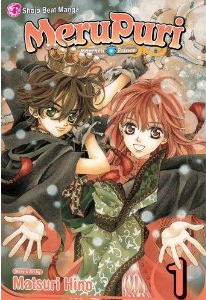
In honor of this week’s Manga Movable Feast, I thought I’d take the opportunity to talk about one of my favorite overlooked Shojo Beat titles, MeruPuri. MeruPuri (short for “Märchen Prince”) ran for four volumes under the Shojo Beat imprint, though it was never serialized in the monthly magazine. Of course, MeruPuri‘s author, Matsuri Hino, has another, more popular series that was published monthly: Vampire Knight. Her work strikes me as being very similar to Arina Tanemura‘s, as they both do wonderfully detailed illustrations with plenty of traditional shōjo motifs such as flowers and sparkles, but the major difference between the two is that Hino’s work often delves into slightly more mature themes, which I can certainly appreciate.

As much as I like Hino’s art, the description on the back of the first volume of MeruPuri did not sound all that appealing initially:

All high-school freshman Airi Hoshina ever wanted was to someday live in a cozy home with a loving husband, and find joy in the little things in life. As a result, she makes it her daily mission to get to school on time because school legend has it that the longer one’s non-tardy streak is, the better boyfriend one will find. But just when her daily routine is working like clockwork, an occurrence of fairytale proportions threatens to disrupt her grand plan. 

On the way to school one morning, Airi drops her mirror—one that had been passed down to her through generations—and suddenly finds herself in a bizarre situation. Never in her wildest dreams did she expect to meet Aram, a little boy from a magical kingdom, to have emerged from the mirror in the short time it took her to track it down! 

Now, little 7-year-old prince Aram has a problem: He’s been hit by a spell cast by his half-brother Jeile that was supposed to turn him into an ugly old man, but instead changes him into a 17-year-old man whenever he is in the dark. The spell can only be broken by the kiss of his beloved (surprise surprise), and since Airi is the first woman he lays eyes on after being cursed, he hastily proclaims his love for her.
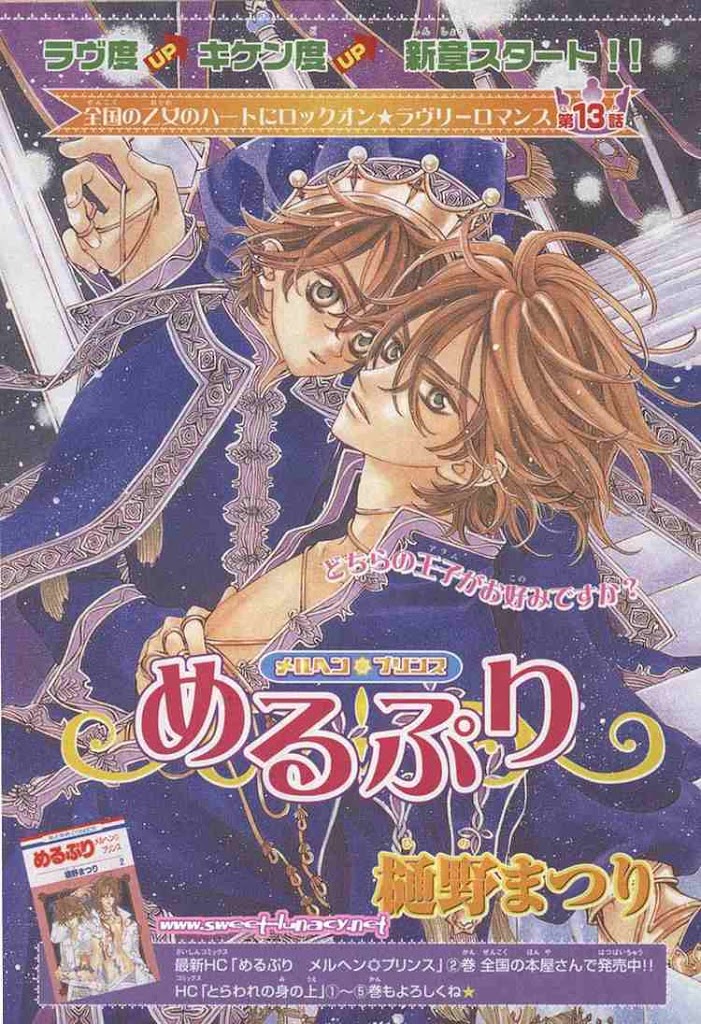
Aram and… Aram

I’m sure some people will immediately have a number of alarm bells ringing after reading the above description. Not only is Airi’s biggest goal in life to live in a “cozy home with a loving husband,” but early on in the story she gets a love confession from a 7-year-old boy. I wish I could say Hino does something spectacular to subvert reader’s expectations, but in all honestly, MeruPuri is simply very appealing fluff. I never really found Airi’s character all that likable, but Aram actually undergoes significant growth over the course of the four volumes –– he starts as a bratty little kid, but he eventually learns that he has responsibilities that he must meet as prince.

Of course, Airi and Aram end up falling in love (very early on, I might add), so much of my personal interest in the series lies in how Hino maneuvers a very strange relationship… It’s not often you see a story where a 15-year-old girl and a 7-year-old boy fall in love, after all. In fact, it may be worth picking up for that alone. Hino does a great job of getting the reader to grow attached to the characters, and, if you’re like me, you may start to have some conflicting feelings about Aram…

I’ll happily admit that part of MeruPuri‘s charm lies in the fact that it is only four volumes long, as well. It’s the perfect length to develop interesting characters in, but not so long that the story starts to feel like its dragging on, which is particularly important given MeruPuri‘s subject matter. The relationship between Airi and Aram may be a little bit too weird for some readers, but anyone interested in a romance that’s a little off the beaten path need look no further than MeruPuri. It’s exactly how I like my shōjo: beautifully drawn, emotional, and just a little bit nuts.
Share
  • Tweet
  • Pin it
  • Share
  • Share
  • Email

Japan Envy: Pikachu Cookware

9 / 19 / 124 / 18 / 15
source

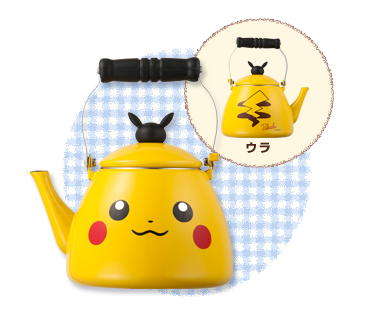
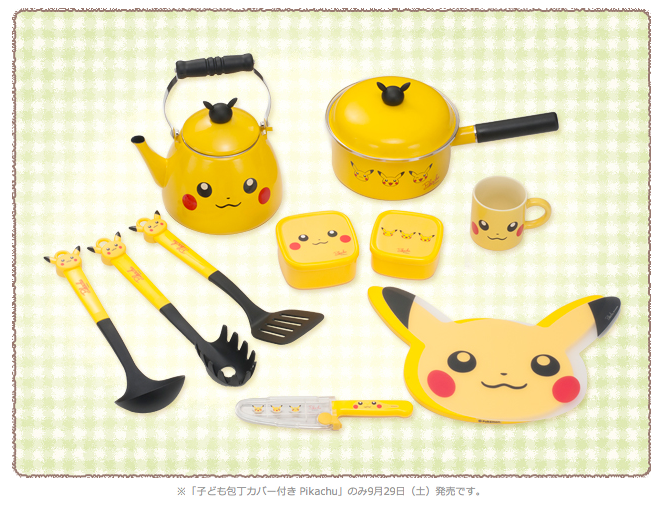
Have you had enough of Pikachu’s adorable face yet? I sure haven’t! Japan always comes up with the greatest ways to plaster cute characters over everything, and from the 20th of September, Pokémon Centers across the nation will be selling these adorable Pikachu-inspired kitchen goods. As you can see, everything from kettles to knives have been Pikachu-ified. I think it’s safe to say that I’d get one of everything! If I lived in Japan, that is.

My favorite is this kettle. Check out the adorable back! Even the knob for the lid is shaped like Pikachu’s head! Boiling water in this every morning would be sure to put a smile on my face.

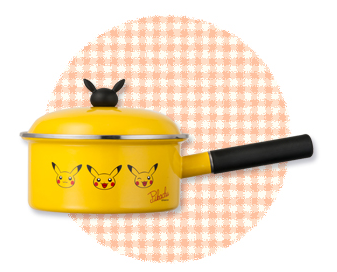
I wish they had a close-up of the knife, too, but this pot will have to do:

I’m not entirely convinced I like the three different facial expressions… Thoughts?

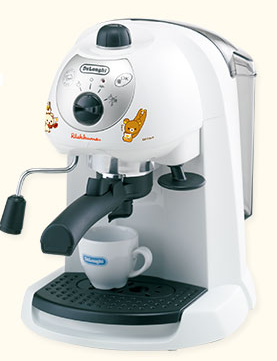
And since I’m on the subject of kitchenware, I thought I’d give this Rilakkuma espresso machine a mention:

Certainly it’d be much better if it were bright yellow with Pikachu’s face on the front!

Share
  • Tweet
  • Pin it
  • Share
  • Share
  • Email

Let’s Fish! Hooked On-inspired fishing game musings

9 / 16 / 124 / 18 / 15
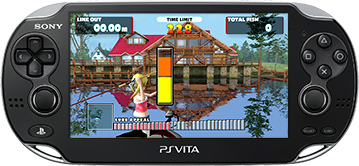
Not sure how useful that knee band-aid is going to be

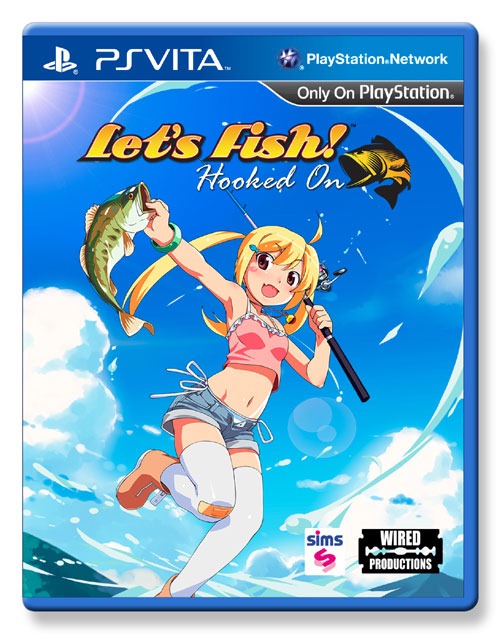
I’m probably not the first person to say that they never expected a moe fishing game to get localized, and I probably won’t be the last, but I’d like you all to take a moment to ponder with me the implications of a moe fishing game coming out in North America over all of the other possible titles that could be in the process of being translated right now.

Okay, I’m being overly dramatic, but I have to say I was completely floored by this announcement. Let’s Fish! Hooked On (or Let’s Try Bass Fishing: Fish on NEXT as it is known in Japan) takes an interesting approach to the world of fishing games by combining sickeningly cute character designs by a famous Japanese artist with “realistic fishing action.” Subsequently, it’s also the first full-fledged fishing game for the PS Vita. I imagine the front and back touch controls could work very well in a fishing game, if implemented correctly.

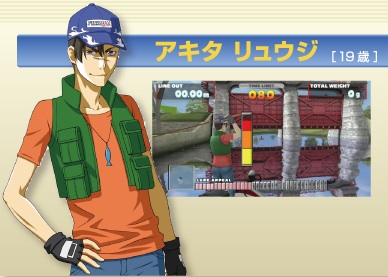
So, does all this mean I’m actually interested in picking up Let’s Fish! Hooked On? Well, aside from the fact that I think the phrase “hooked on” is genius and whoever came up with it should get a raise, I’d have to say intersection of two niches has me morbidly curious. Actually, the first thing that went through my mind while reading the announcement was, “Now wouldn’t that be a hilarious title to blog about!” I’m not exactly sure I should be judging my gaming purchases on how funny they’ll be to read about after I gruel through the process of actually playing them, but I’m sure there is some degree of fun to be had in Let’s Fish! Hooked On. Actually, the developers did take a second to think of possible female fans. After all, one of the four playable characters is a guy:

Well, that isn’t exactly what I was hoping for. 

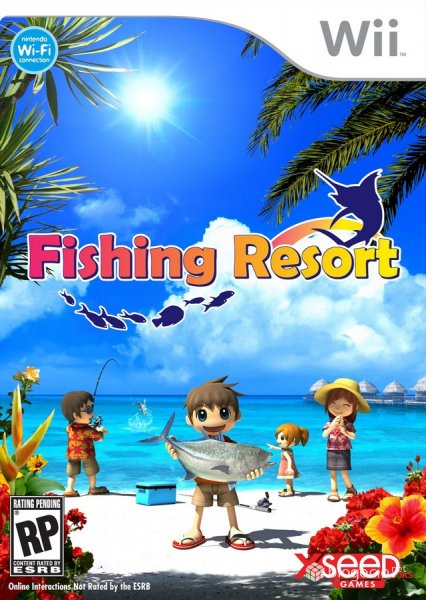
More than anything, thinking about Let’s Fish! Hooked On has got me wondering if it’s time I jumped into the world of fishing games. Fishing Resort, which was released on the Wii late last year by XSEED Games, is another fishing game that caught my eye recently. It largely went under gamer’s radars due to the fact that not many people care about fishing games to begin with, and the Wii was pronounced a barren wasteland of shovelware long before it came out.

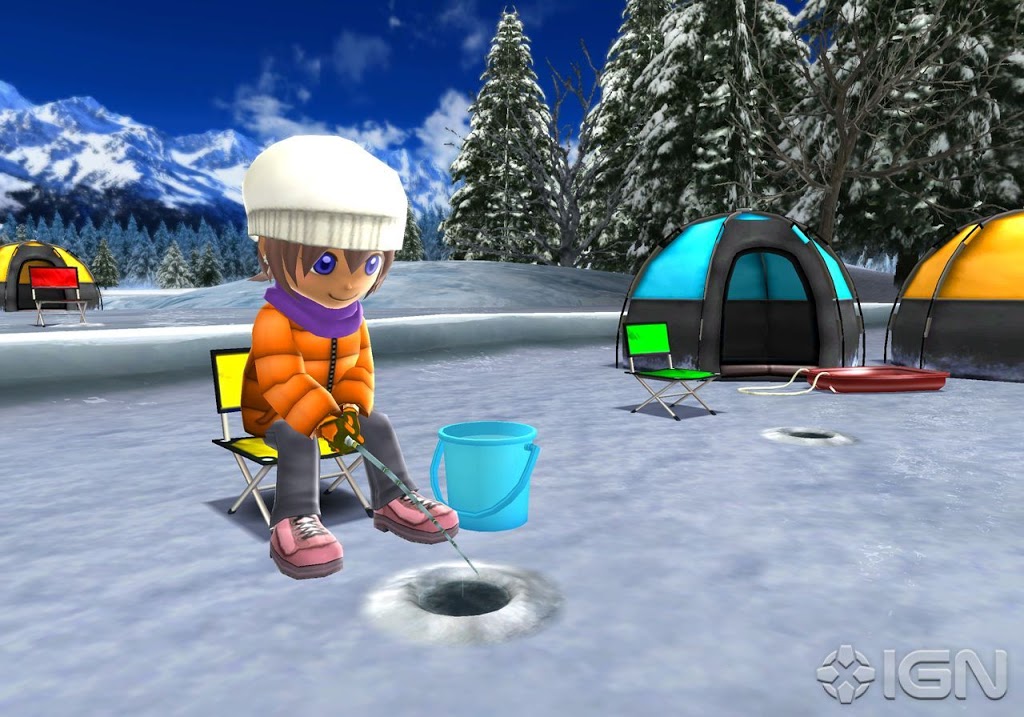
Not only is the art style more to my tastes than Let’s Fish! Hooked On (can you tell I’m trying to see how many times I can fit that name into this post?), but I haven’t heard a negative opinion of Fishing Resort yet. Also, it has ice fishing.

My dad, once an avid fisherman, took me ice fishing long ago.
It was, for the most part, cold and boring. I think I’d much
rather think about ice fishing than actually go ice fishing. 

The moral of the story is that I’m now this close to buying a copy of Fishing Resort. It may not be game of the year material, but it certainly looks like fun.

And since I’m on the topic of fishing games, I can’t not mention the Legend of the River King series. I’ve been debating whether or not to buy a copy of River King: Mystic Valley (DS) for ages now, and my recent interest in fishing games has brought me back to “should I buy it, or should I not” land. The indecision is killing me!

So: fishing games. Love ’em, hate ’em, or ambivalent towards ’em? If I only bought one fishing game, Let’s Fish! Hooked On, Fishing Resort, or River King: Mystic Valley, which would you recommend?

Share
  • Tweet
  • Pin it
  • Share
  • Share
  • Email

Add Sakura Samurai to the list of “games with weird name changes”

9 / 12 / 124 / 18 / 15

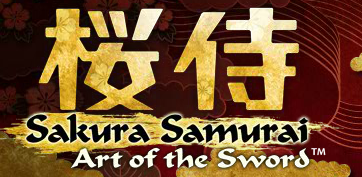
I’ve always wondered what goes into the localization and adaptation of game titles for different regions, and the recent news surrounding Sakura Samurai‘s European release has me scratching my head once again. The 3DS eShop title will not be coming to Europe under the name Sakura Samurai: Art of the Sword, but Hana Samurai: Art of the Sword.

This leads to a number of questions. Is that why the game has taken so long to come out? (it’s been out since February in the US) The most logical conclusion is that “sakura samurai” has already been trademarked in Europe and it took a long time to negotiate a new name with the creators/publisher/etc. I can only imagine how that meeting went down.

“Hey guys, so “sakura samurai” is taken. We’ve gotta change it to something else.”

“How about another random Japanese word?”

“No, wait, I know! Sakura is a flower, right? So let’s just use the Japanese word for flower!”

Hands were shook, meeting adjourned. Okay, if it really went as well as the scenario in my head, then I wouldn’t expect it to have taken so long. By the way, sakura means “cherry blossom” and hana means “flower.” From what I’m aware, “sakura” is a much more recognizable word for English speakers, whereas I don’t think “hana”is anywhere near as commonly known. And why didn’t they go for another Japanese flower term, rather than the actual word for “flower”? The world probably will never know.

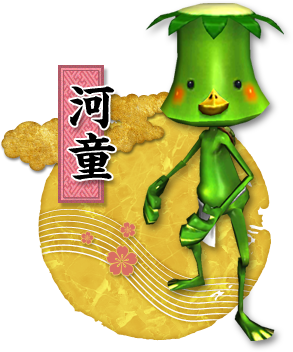
I always love an excuse to post a picture of a kappa!

Now, how about the game’s logo? The North American logo (at the top of the post) features the kanji for “sakura” and “samurai” above the corresponding English. Will they be changing it to the kanji for “hana” for the European release? I’ll be very disappointed if they don’t, though they may figure not that many people will notice.

Of course, I’ll admit I haven’t played the game, so there is the possibility that there is meaning behind the name “hana samurai” that I’m missing. Anyone who has played the title who thinks they have additional insight to add, feel free to post your thoughts in the comments!

Now’s a perfect opportunity to share your favorite game name changes, so have at it! My recent favorite is Fortune Street, which was changed to Boom Street in Europe and Australia. No, I have no idea, either.

Share
  • Tweet
  • Pin it
  • Share
  • Share
  • Email

I don’t care how bad the Vision of Escaflowne game is, I must have it

9 / 9 / 124 / 18 / 15

The Vision of Escaflowne is, without a doubt, my favorite anime of all time. Dating back to 1996, the series tells the story of a high school girl named Hitomi who is transported to the world of Gaea and finds herself an instrumental figure in war where men fight with superpowered mechs known as Guymelefs. Though the premise may sound similar to countless other anime, its beautiful soundtrack, compelling cast of characters, and mix of action with an art style and emotional depth typical to shōjo series make it, in my opinion, a true masterpiece. Not only is it rare to see an series created as an anime first and then adapted to manga (Escaflowne actually got both a shōjo and a shonen manga, which shows how diverse its viewership was), but Escaflowne was markedly more popular internationally than it was in Japan, making it somewhat of an oddity.

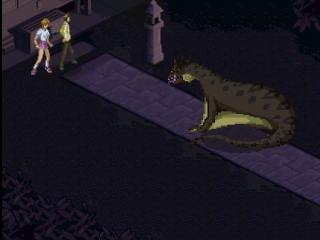
Perhaps it’s that last point that spelled disaster for the series’ video game adaptation. Whatever the reason, the Escaflowne game looks about as bad as it gets –– not only does it condense the 26 episode series into a measly 2.5 hour game, but the graphics are atrocious! See for yourself:
Drab colors, blasé textures… Hardly fitting for one
of the most artistically-inspired anime of the 90’s!
Of course, it should be evident from the title that I haven’t actually played the Escaflowne video game, nor do I own it. It’s been on my “most wanted” list for many a year now, and though a copy generally won’t set you back more than $30, I have yet to add it to my collection. Luckily, blog posts like these give some insight into what the game is actually like, which is enough to make any fan of the anime downright depressed. 
The game reportedly plays a lot like an adventure/visual novel – there is an abundance of text, some voiced dialogue, walking around, and a few mech battles thrown in for good measure. Apparently, the battles aren’t even that much fun. The only plus I can see is that at only 2.5 hours total, it would be easy to get all of the multiple endings if you had the stomach to subject yourself to the entirety of the experience more than once. 
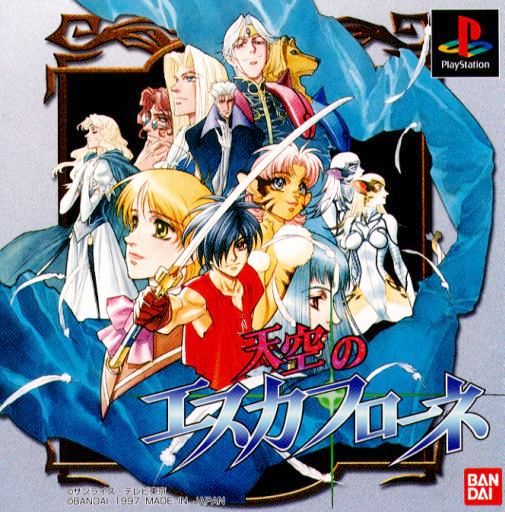
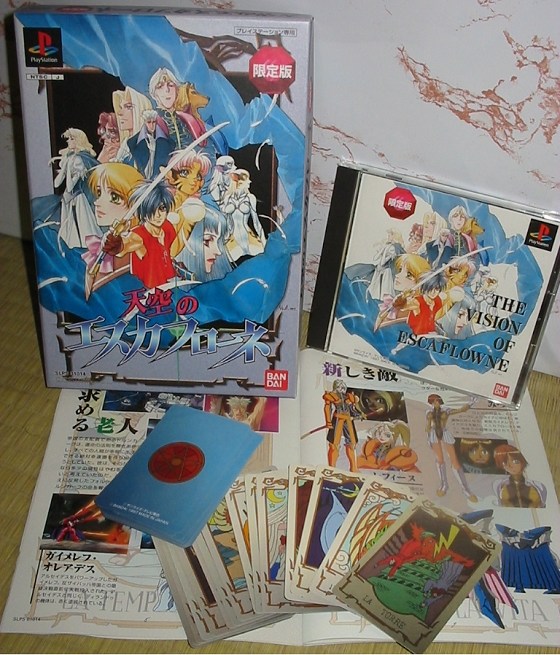
But when all’s said and done, no amount of bad mouthing the game will deter me from my eventual purchase. Why? Just look at this limited edition set:
source
I’d say the box art and that rare tarot edition (modeled after Hitomi’s set) is more than enough to justify the price tag, don’t you? Of course, I’d be tickled pink if the game itself was actually enjoyable, but I doubt I’ll find many redeeming qualities in it outside of seeing how it condenses 26 twenty minute episodes into 2.5 hours. 
For the curious, here’s a video of the first eight minutes of the The Vision of Escaflowne game:
Has there ever been a game you knew wasn’t going to be very good, but you bought anyway? 
Share
  • Tweet
  • Pin it
  • Share
  • Share
  • Email

Take a walk down otome nostalgia lane with Angelique (GBA)

9 / 5 / 124 / 18 / 15
Okay, I confess –- I’m on a bit of a Game Boy Advance kick. Ever since I got my hands on a hot pink GBA micro, I’ve been itching to add a few more GBA titles to my collection. And, since we all know I’m a huge fan of otome games, it was only a matter of time before I acquired a GBA otome game. 
Well, in the case of Angelique, I really should say the otome game. Angelique was originally released for the Super Famicom in 1994, and is generally regarded as the first dating sim title to be marketed specifically towards girls. Players assume the role of Angelique, a young girl who has been chosen as a candidate to become the next queen of the Cosmos. Becoming a queen isn’t easy, however –- Angelique must face off against her rival, Roselia, in a race to see who can populate their country the fastest. Both Angelique and Roselia can call upon the aid of nine elemental guardians to either increase their own country’s stats or inflict damage on their rival’s lands. The otome aspect comes from the fact that the nine guardians are hot men who are all potential love interests for Angelique and Roselia… The catch being, however, that if you choose love, you must forfeit your title as queen. 

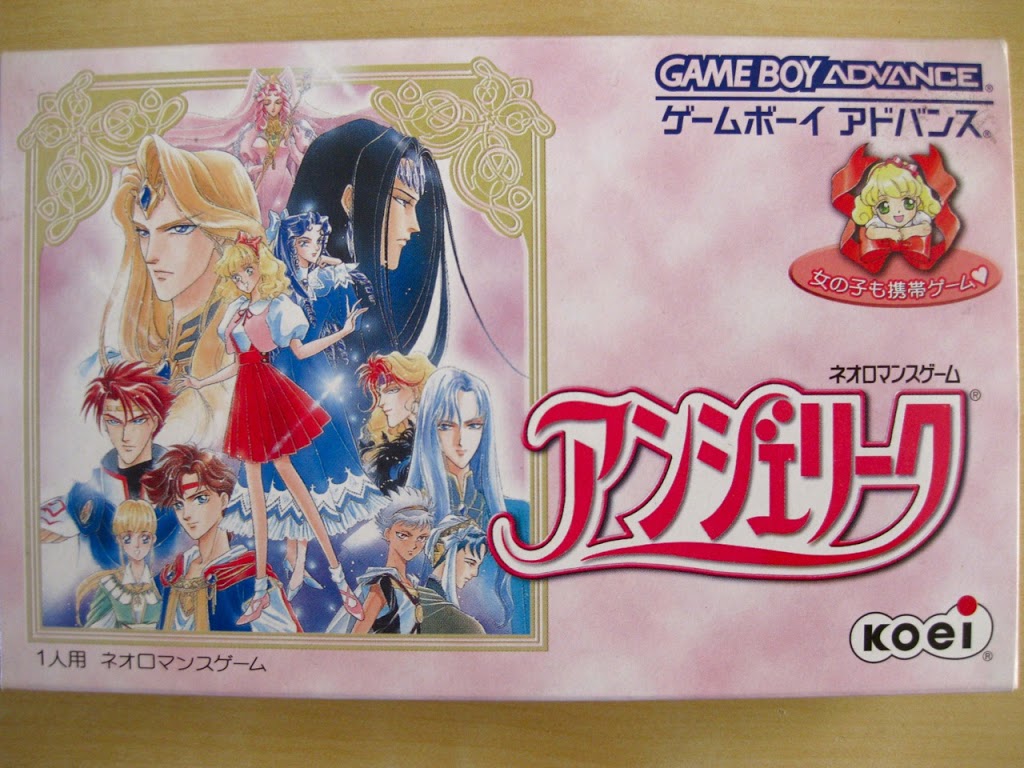
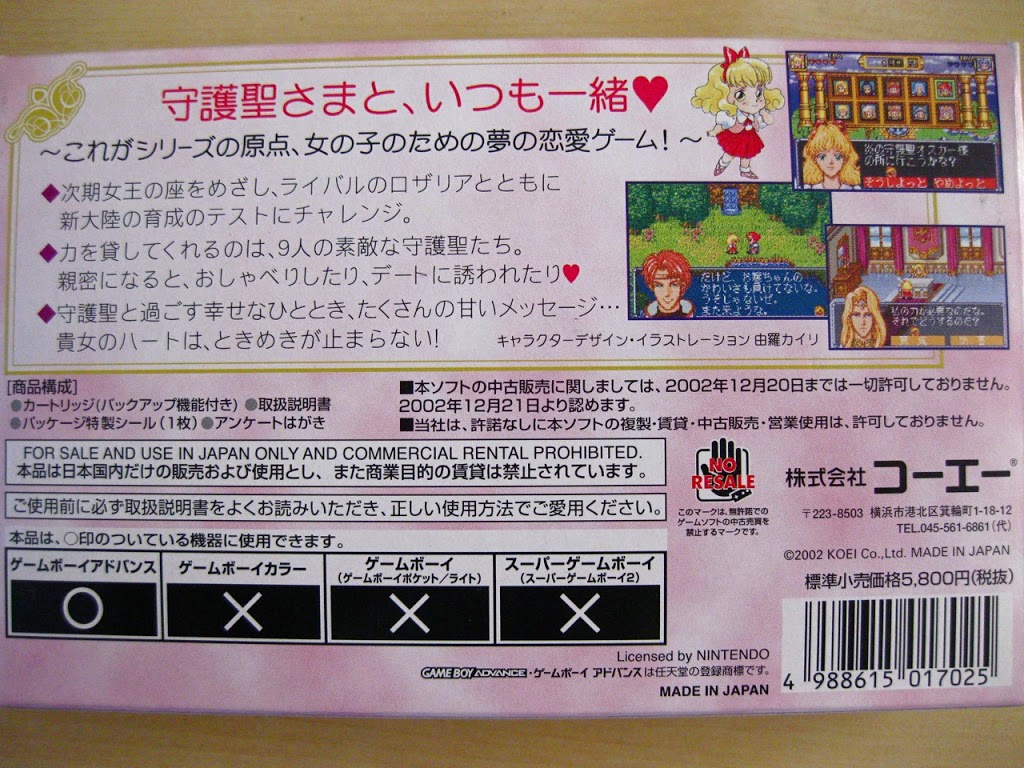
The GBA version is a direct port of the Super Famicom version, and a bare-bones one at that. There aren’t any additions whatsoever to this version, but that’s fine by me, as the portability is a great bonus and the box art, which totally screams 90s shōjo manga, is completely adorable. 
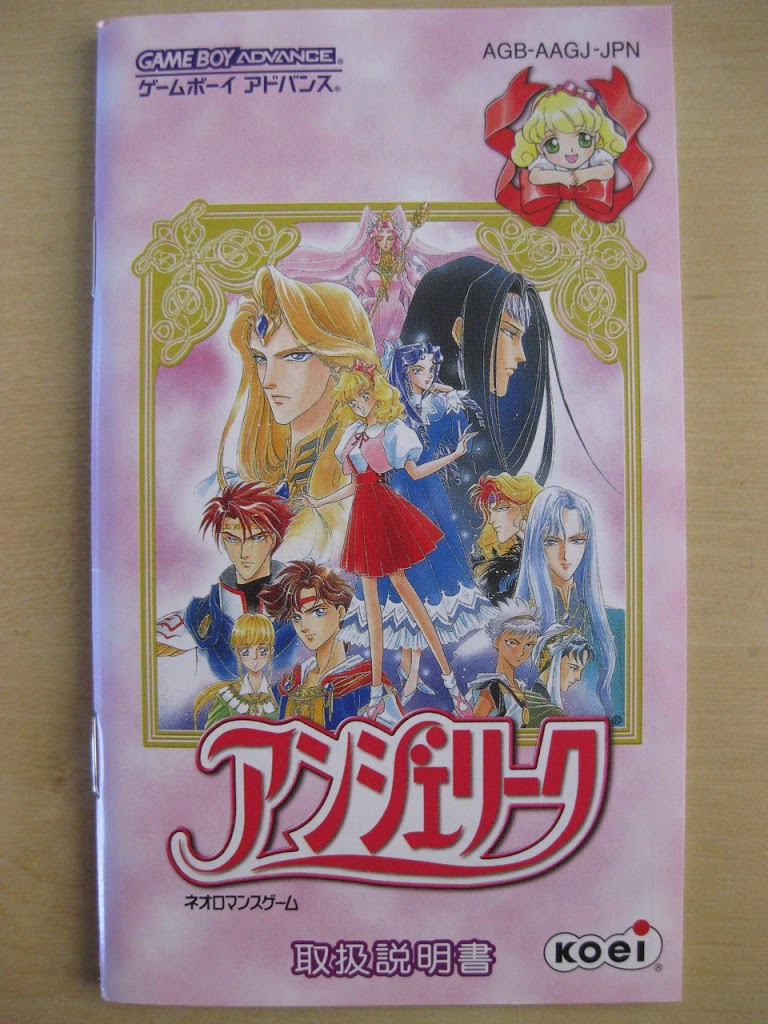
I plan on doing a separate post about the gameplay, but for now I’d like to share some of the great illustrations in the game’s guide!
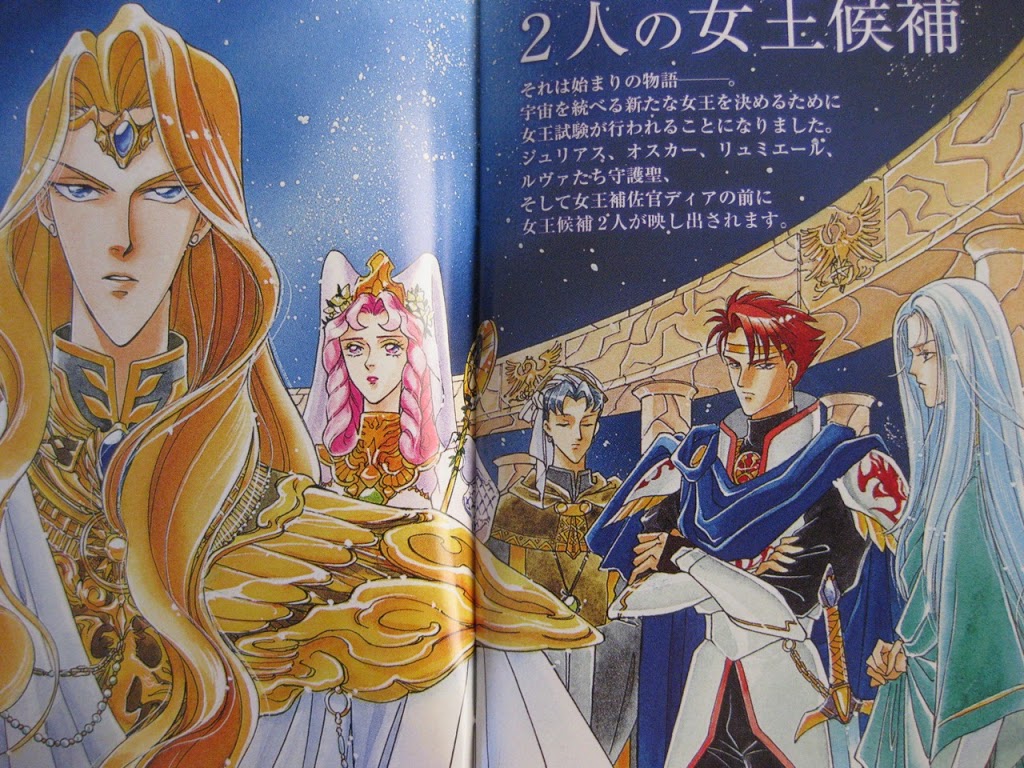
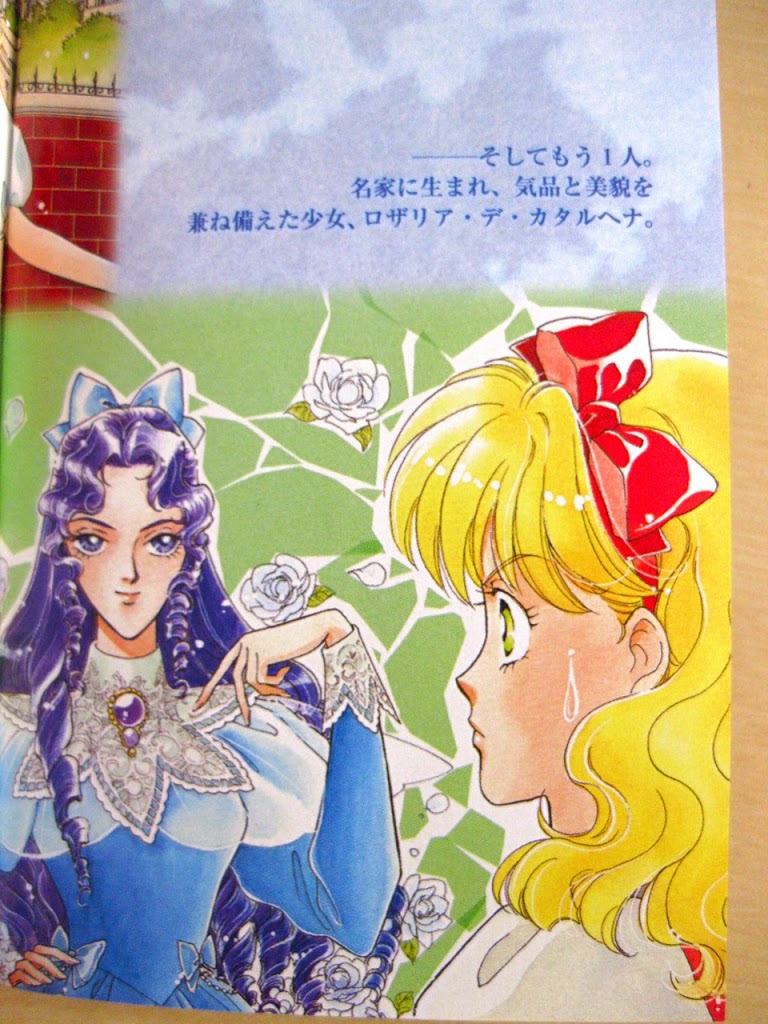
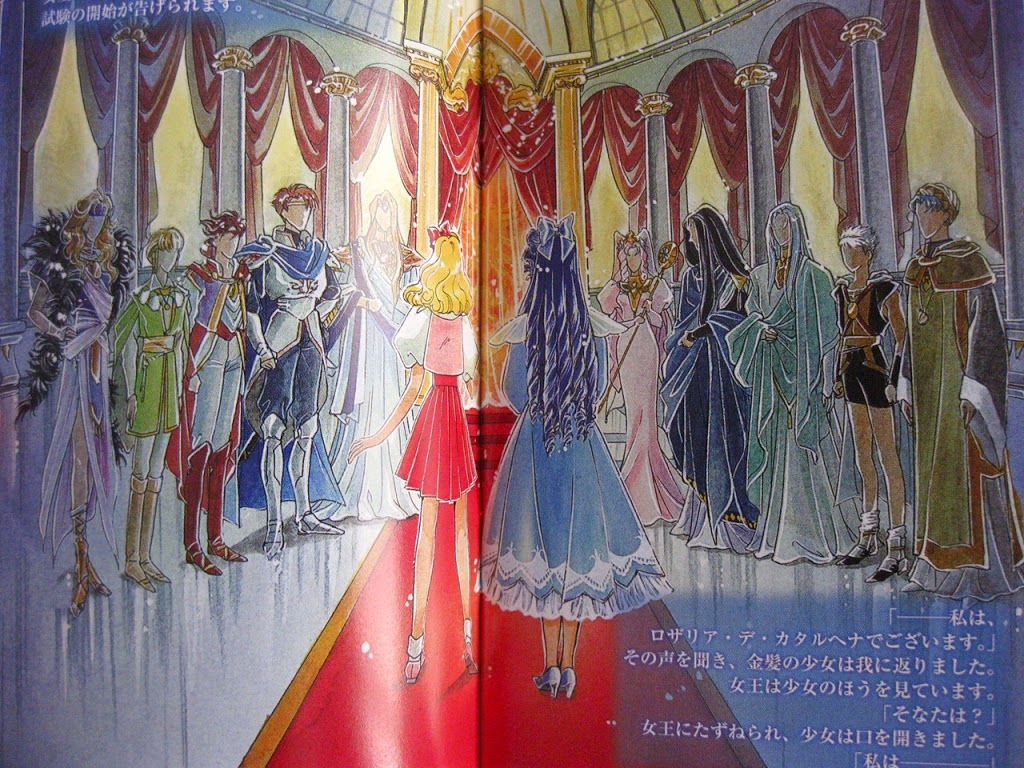
First up are a series of illustrations from the manual’s opening pages, which introduces the premise:

The art reminds me a lot of CLAMP’s early work!
Incoming rival alert! 
Angelique and Roselia face the nine guardians/suitors

It’s interesting to see the emphasis placed on quality illustrations inside the manual. Modern otome games have the technology to actually replicate manga/anime-style art in the games themselves, but the Super Famicom couldn’t really give the same effect, so the images in the manual really mimicked manga styles of the time.

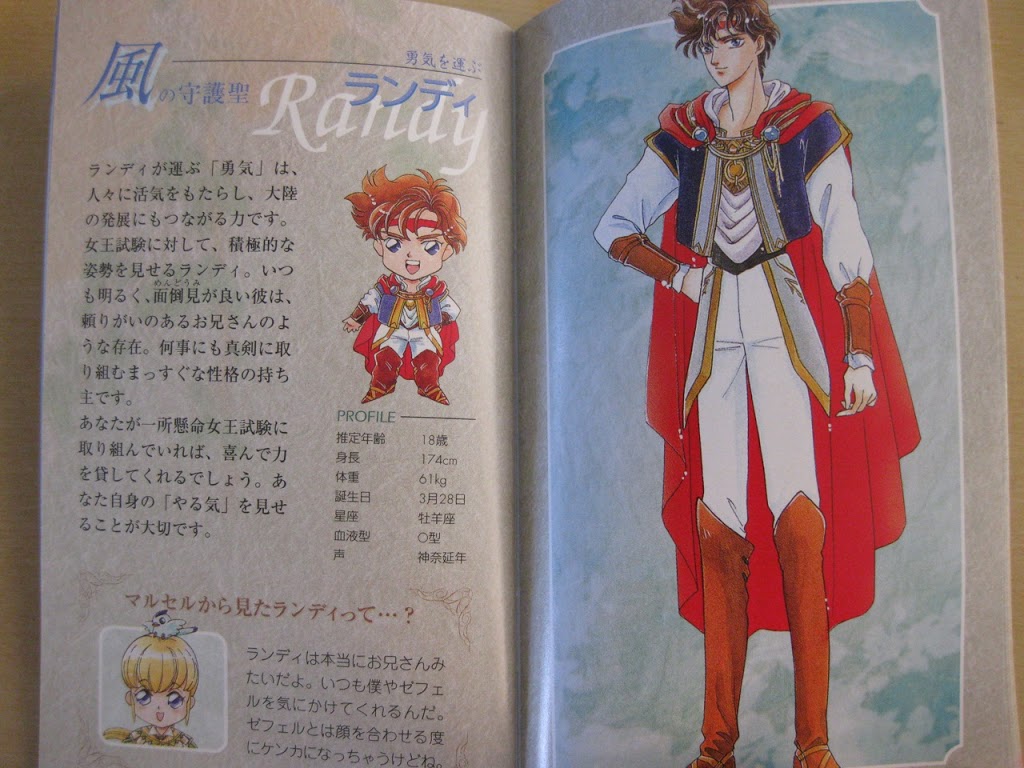
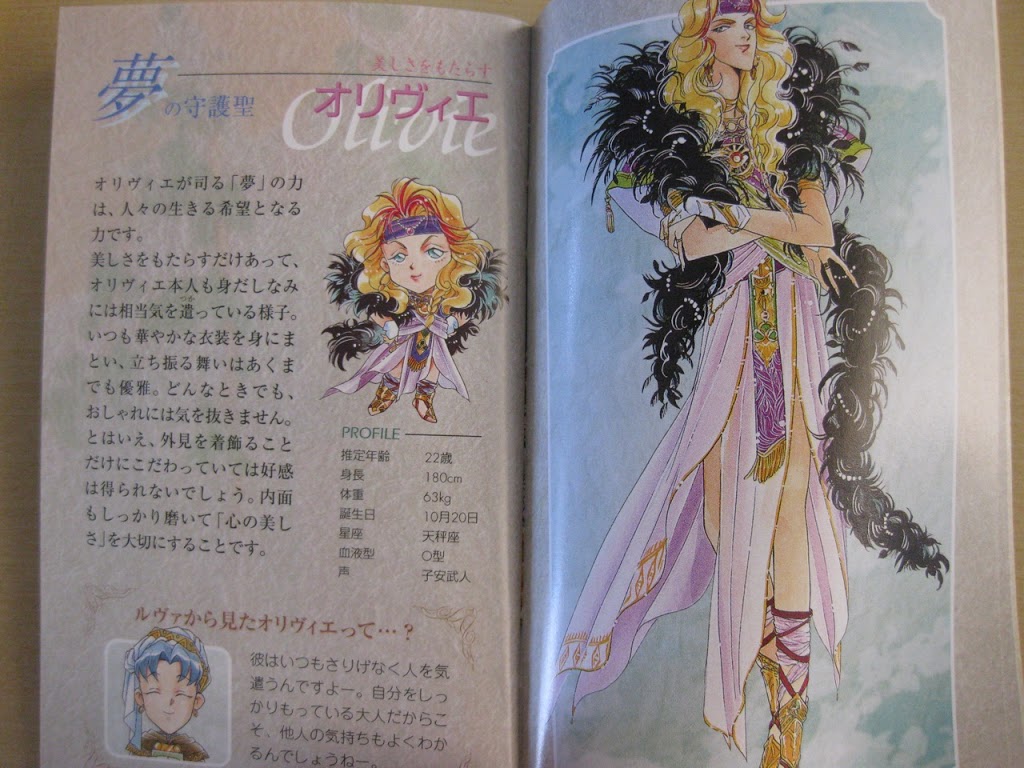
Next up are a few guardian profiles. Each guardian has a specific element he resides over, which is generally reflected in their design and personalities.

Randy, the wind guardian
Olivie, the dream guardian
Traditional shōjo alien hands 
Closeup of Lumiale, the water guardian,’s profile

Finally, here’s just one sample page of the instruction portion of the manual. Not quite as interesting as the above sections, as pretty much all of the pages look the same, but they’re very colorful and littered with screenshots and quaint illustrations. 

Overall, I’d say it’s a pretty nice manual! In an upcoming post, I’ll talk about my first playthrough of the game (Ever! Can you believe it?). Do I choose to become queen, or elope with one my guardians? Stay tuned!

By the way, have I ever mentioned that I’m complete rubbish when it comes to making up titles for these posts? I probably would’ve had this posted days ago if it weren’t for the fact that I couldn’t come up with a witty title. I’ve toyed with the idea of doing something similar to The Gay Gamer’s Acquisition #123 series, but I don’t really plan on posting every time I get a new game… Any thoughts/suggestions? Leave them in the comments! 

Share
  • Tweet
  • Pin it
  • Share
  • Share
  • Email

Seifuku no Ojisama is for all the daddy lovers out there

8 / 27 / 124 / 18 / 15
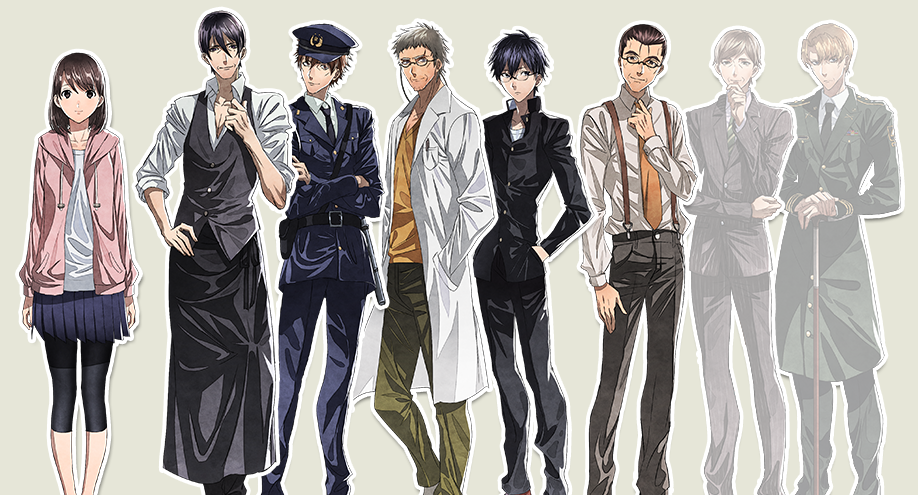
Seifuku no Ojisama. Older men in uniform. This upcoming Android otome game puts more mature men then we normally see in games such as these as objects of our protagonist’s affections. Poor Sachi, a third year university student, has the hots for men more than twice her age, and, like in any good otome game, it’s the player’s job to make sure she finds true love (as long as it comes in uniform!). 
I have to say, I am beyond intrigued by this premise. I’ve long thought older men were turning into somewhat of a trend in female-oriented media in Japan, and this confirms my suspicions. Funnily enough, the boys love manga titles I’m familiar with that feature older men all focus on café staff and the like, so perhaps the two go hand-in-hand? 
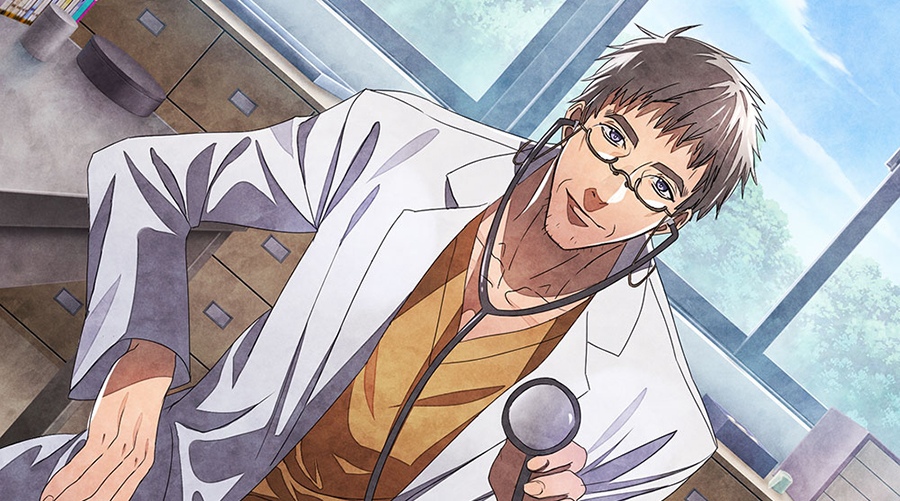
You can give me a check-up any day!
For the curious, the oldest male suitor revealed so far is 60 years old (and a professor, at that!). Gameplay is traditional otome game format: players read through text and make an occasional selection to dictate the path of the narrative. Seifuku no Ojisama adds an interesting twist, however, in the form of two types of endings, called “receiver” and “pursuer.” Depending on which options you choose, you may get an ending where Sachi makes the first move, or has the moves put on her by her love interest (completely non-sexual moves, I’m sure, since this isn’t a PC game). If you don’t pick the right response, you might even be stuck with the “friend” ending.
Though friend endings are common for “bad” endings in otome games, where the player hasn’t met the right conditions to have a “good,” romantic ending with one of the characters, this “receiver” and “pursuer” element is something I’ve never seen before. Even more interesting is the fact that it’s literally called the seme and uke system in Japanese. Seme and uke are pretty much exclusively used in reference to the male characters in boys love manga (referring to “top,” and “bottom,” respectively), so this may be a conscious nod to the BL fans who are eagerly eating up any and all stories about older men these days. But if that’s the case, why not make it an all-out boys love game, instead? Perhaps they are trying to reel in a larger audience while still appealing to BL fans, or that BL games don’t fare as well on smartphone markets. The alternative is that I am, of course, reading too much into all this. Just some food for thought! 
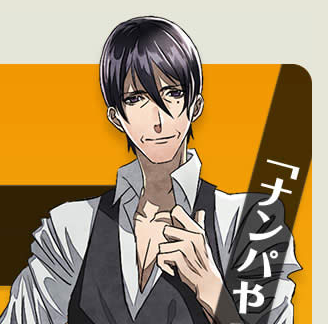
My personal favorite from the male rooster. What can I say?
I appreciate a man in a vest and apron! 
So, otome fans and non-fans, is the idea of a game that features older men (or women, if bishōjo titles are more your thing) something you’d like to see more of? I have a feeling most would write it off as unappealing or worse, and though I readily admit it isn’t for everyone, I personally think it’s all in good fun and would be eager to give this game a go myself. If you’re interested, do head over to the character page and let me know your favorite! (Before anyone asks, the younger guy in a school uniform is the protagonist’s cousin. It says he has a secret… I sincerely hope it isn’t that he turns into a 50-year-old man at night!)
Share
  • Tweet
  • Pin it
  • Share
  • Share
  • Email

Posts navigation

Previous Page 1 2 … 93 94 95 96 97 … 113 114 Next Page

Welcome!


Name: Anne

Chic Pixel is where I write about my favorite hobbies, with a focus on the cute and nerdy!

Email Chic Pixel Subscribe to Chic Pixel on Youtube Follow Chic Pixel on Instagram

Subscribe to Chic Pixel

Recommended Posts

Chic Pixel's Ultimate Guide to Blogging
How I Edit Instagram Photos and Nerdy Flatlays
Yaoi and Boys' Love (BL) Manga Studies Reading List
How to Make a Japanese iTunes Account
How to Purchase Manga from the Japanese Kindle Store

Affiliates

Support Chic Pixel by shopping at my TeePublic merch store! I've hand-picked the best cute and nerdy designs that you can purchase on a wide range of products such as t-shirts, mugs, hoodies, stickers, and more! All purchases support the independent artist that created the design, as well as Chic Pixel!

Favorite Sites

Contemporary Japanese Literature
Yatta Tachi
Kimimi the Game-Eating She-Monster
The Gay Gamer
Otaku Journalist

Categories

Archives

This site contains affiliate links. Any purchases made by clicking on one of my affiliate links earns me a small commission that goes back towards keeping the site running. Your support is greatly appreciated!

Angie Makes Feminine WordPress Themes