
Fan service. Anyone with a passing interest in Japanese media, be it manga, anime, or video games, has probably encountered fan service in some form or another. Fundamentally, fan service is anything added to a product with the intent of pleasing fans, whether it be excessive violence, sexual elements, etc. (or anything catered towards a specific fandom), but in recent years it has come to be most often associated with titillation – think panty shots, skimpy clothing, and pin-up-like poses.
 |
| Swimsuits are a common sight in anime magazines |
As a self-proclaimed feminist and someone who pays very close attention to representations of both men and women in the media I consume, I consider myself fairly in-tune with fan service and its various forms across Japanese anime/manga and video games. I want to start off by making it clear that I don’t believe there is anything inherently wrong with fan service (who doesn’t like products that are specifically catered towards their demographic?), but I have a very hard time coming to terms with the level of excessive female fan service in majority of popular anime/manga and video games today.
One series that is particularly notorious for gratuitous fan service of the decidedly female variety is BlazBlue. And, funnily enough, I consider myself a fan of the series. Now I’m sure we could argue all day about fan service and sexism in fighting games –– after all, they’re generally the go-to games for pointing out sexism in the industry –– but I think an equally worthwhile discussion is how we, as individuals, come to accept our interest in media that clearly has elements that rub us the wrong way, for lack of a better phrase.
Here are a couple of official illustrations of two female characters from the series:

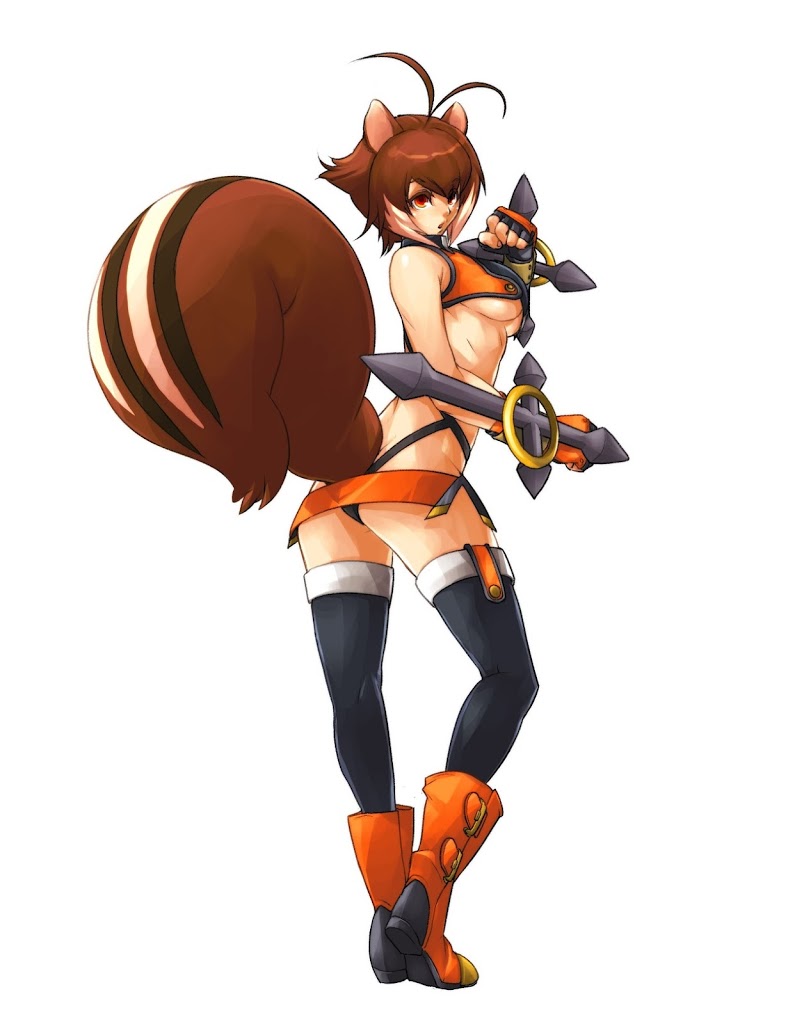
Now I’ll be the first to admit that I absolutely refuse to play as either of these characters purely on the basis of aesthetics alone. I understand that the studio behind the BlazBlue games has a demographic they are catering towards, but I also know there is a large community of female fighting game players, as well. Sometimes that’s hard to believe, especially when BlazBlue is riddled with things like this:
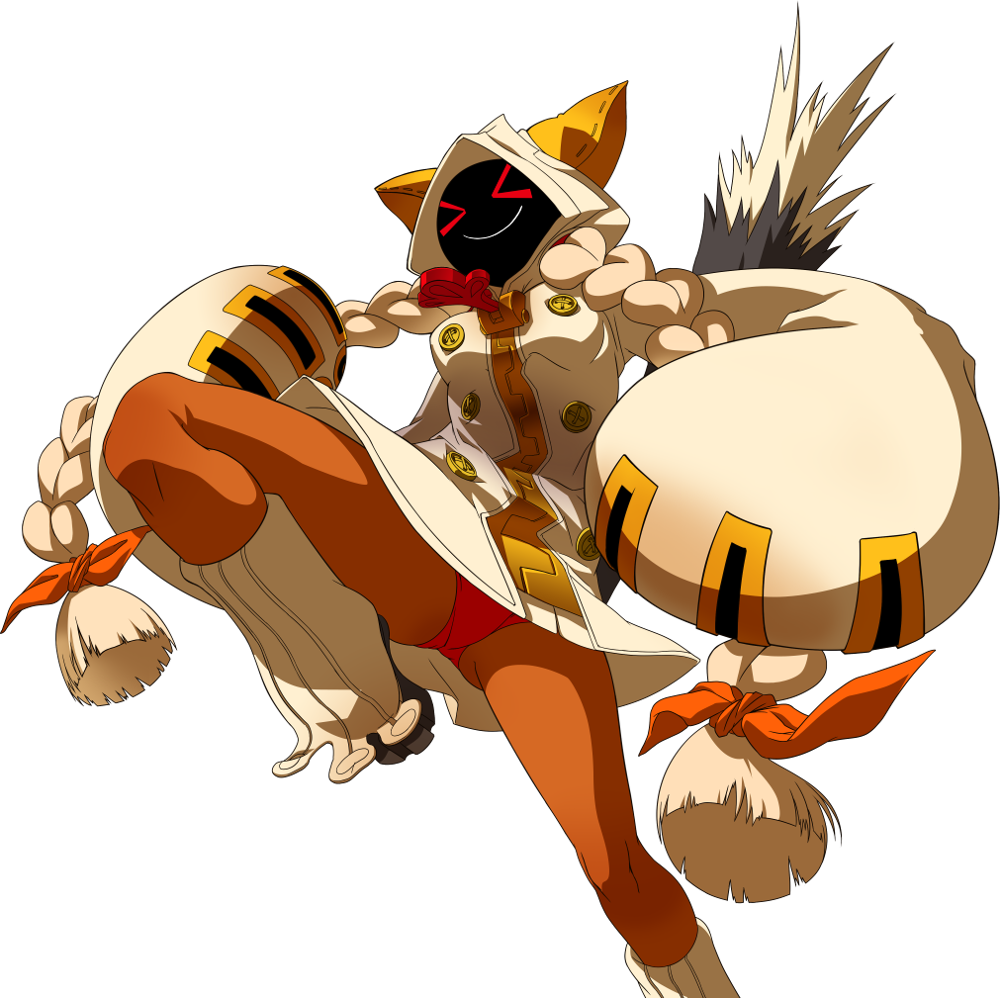 |
| A common character illustration from BlazBlue‘s story mode |
And would you believe that I’m not even going to touch the huge amount of fan service outside of the illustrations, such as continuous references to the various female characters’ cup sizes in in-game dialogue? Honestly, it’s impossible to address it all.
I think the thing that surprises me the most about BlazBlue is that it isn’t some obscure visual novel or a manga series aimed specifically at horny men who want to look at pictures of girls in their panties all day. This is a popular fighting game that a wide range of people play, and yet it’s full of sexualized depictions of its female characters and racy dialogue.
So why do I play it? Well, it’s fun, of course, but every time I turn the game on I find myself cringing at something or other. I can’t help but ask my self, “Why does this need to be here?” Is fan service so fundamentally integral to BlazBlue? Can we just chalk it up to the Japanese being their usual whacky selves? Thinking about all of this is giving me a headache.
I honestly don’t know where to end this discussion, as I can’t come up with an answer as to why BlazBlue and so many other popular games feel the need to sexualize their female characters to such an extreme extent. More importantly, if I don’t like how women are represented in these games, should I just stop playing them? There are so many different types of people playing video games than just straight men who enjoy this narrow idea of fan service, so why isn’t there more media acknowledging this?
In closing, I’d like to highlight the very small amount of male fan service found in the BlazBlue universe. There’s not much, to be sure…
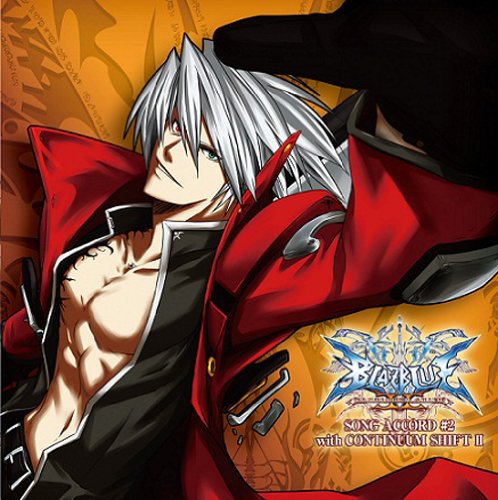 |
| An official CD featuring a male character with an open shirt in a sexy (?) pose? Gasp! |
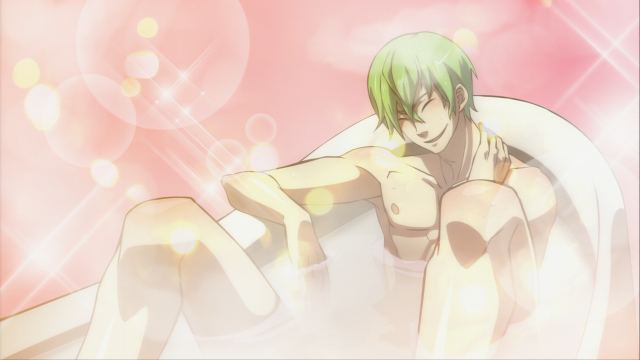 |
| An actual in-game CG. Arc System Works must be aware that this character has a number of female fans… |
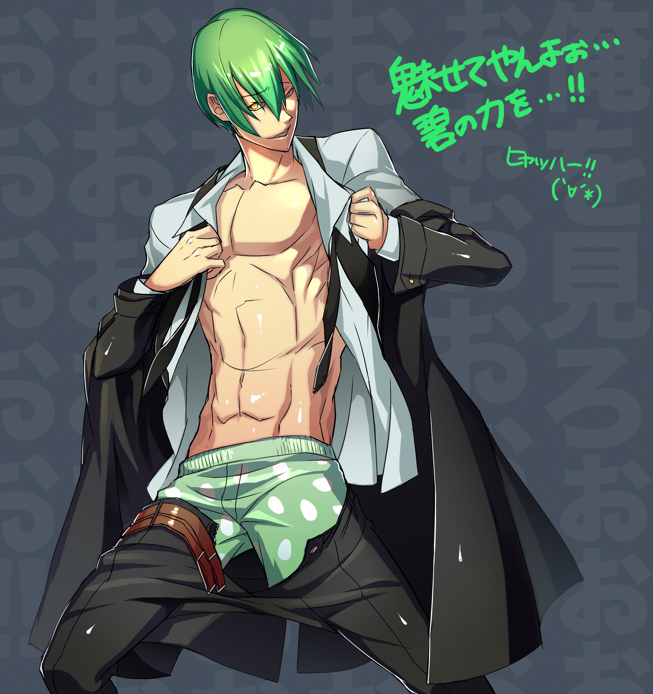 |
| A fan illustration. Proof that BlazBlue is subject to more than one type of gaze. |
For more discussion of fan service in manga, see Manga Bookshelf’s Fanservice Friday series. Those interested in a more academic approach to fan service in anime and manga would benefit from reading Keith Russell’s The Glimpse and Fan Service – New Media, New Perspectives. Unfortunately I could not find any discussions of fan service in video games, but if there’s something I’m missing, please let me know.

For me, the point where fan service goes from being acceptable, and a punch in the face to the feminist movement, is where it loses the irony.
So in other words, I have no issue with fan service when it’s there as much to poke fun at the whole idea of fan service as it’s there as actual fan service. Self-referential post-modernism and all that.
I think BlazBlue, Lollipop Chainsaw, the Atelier games and Hyperdimension Neptunia (just listing my favourite examples) are all pretty self referential. The moments of fan service are almost universally accompanied by tounge-in-cheek humour, and I tend to read that as a gentle ribbing at the fans if anything.
Matt – You make a really good point, as always!
In the case of BlazBlue, the main reason why I think I take issue with it is the sheer amount of fan service EVERYWHERE in the series. The only other game I’ve played that you mentioned is Atelier, and to me I feel like there’s a pretty significant difference in the amount of fan service between the two. Where it felt occasional in Atelier, it seemed really in-your-face in BlazBlue. But that might also have to do with my having a greater tolerance for the “type” of fan service the Atelier series offers?
The other thing with BlazBlue is that for every wink-wink joke about fan service the developers make, there’s just as many instances of them openly accepting and promoting the fans being well… perverted fans, if you know what I mean. For example, in BlazBlue: Continuum Shift II, you can unlock all of these really raunchy fan illustrations in the gallery mode. It’s one thing to be able to Google pictures of scantily-clad characters from the series, but it feels a lot different when those images are actually added to the game itself.
So I guess what I’m saying is I definitely see what you mean about it being self referential, but in this case I feel the sheer volume might cause it to lean a bit more towards the “slap in the face to the feminist movement” side of things.
Honestly, this is the sort of thing that’s turned me off anime completely. Not only is fan-service absolutely rampant in the medium but it’s also joined by such an absurd amount of self-referentialism. It caters to such a small audience I can’t watch the majority of it anymore.
I’m honestly… a bit pessimistic about anime. All of the studios have to make anime aimed at the otaku market because they’re the only ones who buy DVDs. There are some exceptions of course but it’s worrying.
Alois – More good points! Actually that bit about otaku being the only ones buying DVDs is totally spot-on! DVDs are so exorbitantly priced in Japan that that would totally make sense (though of course all of it is also aired on TV, where many people can watch for free).
I do agree that a lot of modern anime makes the assumption that the viewer is extremely familiar with the medium, whereas I don’t think many series in say the 90s were. Not to the same extent, anyway. It really is a shame but there are some gems out there that you just don’t hear so much about, what with the rabid fans being, well, rabid about all the fan service-y stuff. Phooey, I say!
Anyways I’m actually watching this romantic drama called Natsuyuki Rendezvous right now (you can stream it on Crunchyroll) – it’s quite different than a lot of other anime around and if you don’t mind a down-to-earth love story, it’s been pretty solid so far. Feel free to ask me to recommend some good stuff if you’re ever interested :3
As someone who loves playing fighting games, I tend to be upset at the turnout for such games like Skullgirls and Arcana Heart. I mean, both games are pretty much the center of using women as sexualized objects and heck, it’s a shame because it shouldn’t detract people from playing these otherwise great fighters.
However, they do and it’s not hard to see why. I do sometimes feel that these games draw the wrong crowd of gamers. Have you ever seen someone sit down and watch 4 Arcueids fight each other, all CPUs, while he stares intently at the screen?
… Scary, and this happened on a College campus. o_o;
Mog – Thanks for your comment! 😀 It’s great to hear from someone who’s pretty active in the fighting game scene (I’m firmly planted in the “casual” arena, myself).
From your experience, does it seems like the majority of people who play games like Skullgirls and Arcana Heart do so because of the fan service-y elements, or do they tolerate the fan service because they like the gameplay? I’m sure the communities are different between the US and Japan, but I’m curious to know.
I do agree that it’s a great shame these games couldn’t appeal to a broader audience by just toning things down a little. I can’t believe the developers feel that their games aren’t solid enough to sell just for mechanics and not the fan service elements, because they’re all such solid games! Are they just trying to get the added sales of people who might not normally play fighters but get sucked in due to the cute girls and panty shots?
Also, that story is… really weird. I mean, I really am fine if that sort of thing is your (not literally YOU, you know what I mean, haha) cup of tea, but it really does feel like a lot of these games/manga/anime are selling themselves short by pandering to a specific audience. There actually is some decent content that just isn’t getting mileage outside of a small niche demographic due to the near-creepy level of fan service!
It’s really hard to say if it’s one or the other, though if I had to make a guess I’m certain it’s more towards the fan service.
To kind of bring in a perspective on this, I look at some VNs that come with erotic content, namely Fate/Stay and Tsukihime. Right now, they can stand on their own two feet. Back then, I’m sure the developers had to tie these in just to get some attention. Same goes for the early PC-98 days.
But now we’re looking at a game like Persona 4 Arena, which I think is going to sell really well. Granted I think the “Fan Service” part is not so much in panty shots and gigantic chests, but rather a familiar set of characters that are taking part in the game. Because of that, we’re most likely going to see Persona fans picking up the game, most of who may not play a fighting game on anything beyond casual.
While I don’t speak for the fighting game community as a whole, I will say that there are some people that we don’t want to associate ourselves with… Just because of how creepy they can be. o_o;
Just because the “fan service” is supposed to be “self-aware” or “a parody” doesn’t really make me feel better about any of this, it just seems to say, “As long as we are open about our sexism, it’s better than pretending to respect women.” Some of those games mentioned above don’t even have self-awareness; Alex Ahad (who is the creator behind Skullgirls) seems to think that he is genuinely helping the depiction of women by giving them “a significant contribution to the story” but the way he designs his characters seems to suggest that he thinks a woman’s only purpose to exist is to titillate. Some of his game’s story has one of the most stupid moments-one girl is groped and fights off her attacker, but then while she is doing so, the viewer is treated to a clear view of her butcheeks and tiny underwear. And it’s even more frustrating when his male characters, like most male game characters, are heavily dressed and not sex objects. Guys like him probably are so desensitized to female nudity that they can’t see how or why it is fundamentally sexist to suggest that “sex object” is an inherent female trait.
Mog – Interesting point about VNs like Fate/Stay Night! I’m not very familiar with the series but I did play Fate/Stay Extra, and that certainly didn’t have any of the risque stuff that the first VN did (which had 18+ material, didn’t it?). From my impression, much of the Fate/Stay stuff nowadays is more of the “get everyone’s favorite characters together for lots of screentime” type of fan service.
And of course that ties in with Persona 4 Arena being more of the character-oriented fan service than the sexual under/overtone-type of fan service.
Thanks again for all the great insight you bring to the discussion!
Anon – Hello! Thanks for your comment.
Thanks for bringing up Skullgirls from the position of someone who’s actually played it (or watched gameplay videos, perhaps?). I didn’t mention it precisely because I haven’t played it and have no interest in doing so, and that’s 100% because of the rampant sexism I feel is in the game, as you’ve mentioned.
Again, I wonder if because I am more partial to anime-style art, that plays a part in my being slightly more willing to accept fan service I don’t necessarily like or approve of. It’s a little disappointing, but that may be the case, in all honesty.
It really is disheartening when the creators themselves claim that by having girls in skimpy clothing that makes them “sexy and empowered,” which I’m pretty sure was the case with Skullgirls, right? Of course women can be empowered and sexy but I see little reason to put all the female characters in such revealing clothing and titillating situations if not for the fan service factor, as you mentioned.
Do you feel that perhaps the approach to fan service differs between Japanese and western creators? I have to say it does, and that the culture in Japan surrounding fan service is fairly different, which is why we get so much of this “out there”-type stuff. Skullgirls was just one game, and look at the backlash it had! If people got up in arms about sexism in every game that came out in Japan, well, we’d be raging every second of the day…
In the end, I think it’s safe to say I definitely can appreciate the fan service that centers around presenting characters the audience is familiar with (see above discussion on Persona 4 Arena), but the pandering of female characters as sexual objects just needs to stop.
I only watched a trailer for the game, which is how I know about that underwear scene. In Japan, there is a specific kind of fan-service called the “panty shot.” The reason why Skullgirls was particularly criticized was because it seemed to have been influenced by those basement dwelling, otaku-friendly, all-girl fighters like Arcana Heart that are filled to the brim with creepy fan- service, underage or not. In America, there is a stigma against anime which leads to people who are otherwise unfamiliar with it associate it with images of underage sexpots being groped by tentacles. Since American media is not associated with this and is considered to be more feminist than Japan, it gets people angry when something like this was made in the US because they expect more from a country that is supposed to be all for women’s rights. As for the “empowerment,” one Feminist Frequency said it best, “Taking sexploitation-style chicks and squeezing them into the typical male action role is not empowering. That is simply the male creators trying to redefine a strong female character and repackage her in a way that is pleasing to the male adolescent viewers.”
I’m a fan of BlazBlue, and I appreciate you not giving an overly dramatic depiction of Fan Service, it’s not the devil, but it is irritating to me. I’m male, and female characters being sexual is fine, great even, but when it becomes sexual for the sake of being sexual it’s honestly a little bit insulting to both genders and the depiction of women that, no matter what they are or what they are doing or accomplishing, at the end of the day they are objectified, irks me constantly.
The truth is this is a casual video game so the developers don’t want it to be taken too seriously, and they probably think that it’s so casual that they don’t have to justify everything they do, and maybe they’re right. I just feel as though no matter what form of media it is, the oversexualisation of women (or men, who knows?) is upsetting to see.
Josef – Hello and thanks for your comment! I’m glad you think I didn’t come off as strong strong in my post – I don’t want anyone to think I despise fan service! Even if it’s not always my cup of tea, I’m very much of the opinion that given the right context, it can be done well.
Is BlazBlue really a casual game, though? It’s been one of the top fighters in Japan for years now and I’m under the impression that it’s played quite competitively. If this is “casual,” what would you consider a non-casual fighter? Regardless of how casual or hardcore it is, it certainly has mass appeal, and I’d like to think there are plenty of people who play it for the gameplay and not so much the fan service.
I definitely agree with you that hypersexualization and objectification of -anyone- is wrong and not something I want to be seeing too often. But if it’s in the right context and done respectfully, there’s nothing wrong with finding a character sexually appealing or even the creators intending them as such. I just want to see characters that are more than sexual objects in the media I consume 🙂
A casual game would probably be very simple, easy to use, and entirely lacking of any potentially offensive content such as female hyper-sexualization. Part of the reason why most women and children play casual games (from what I’ve heard) is that the simpler controls and short length are more fitting to their minds and schedules, and they are devoid of the sort of male-gaze oriented depiction of females. An actual casual fighting game, then, would have controls that any person could learn easily and characters that are not immediatley offensive or sexual, since it would be aimed at families with children.
Anon – That’s all well and good, but I honestly can’t think of a casual fighting game. Sure, there are “casual” games in a vast variety of other genres, but a fighting game? Maybe a brawler, but I wouldn’t put that in the same category as a 2D or 3D fighter. Perhaps the nature of the fighting genre is that it is inherently intended for the non-casual audience.
I don’t even think all fighting games have the same level of fan service as BlazBlue or, say, Skullgirls, though. A lot of the Capcom fighting games, such as Street Fighter, don’t really have any “potentially offensive content,” as far as I know.
I definitely see your argument for some people leaning towards casual games for their lack of a male gaze, but I just don’t think fighting games have that sort of casual equivalent you’re talking about.
I meant casually in terms of a game that doesn’t take itself too seriously, I’ve played most of Calamity Trigger, and although it seemed to have some sort of strange storyline going on, I get the impression it isn’t trying to be a hugely relevant game to the industry, even if it is a best seller. There’s nothing wrong with that, BlazBlue is really really fun. I’m just point out it has a very relaxed and unapologetic attitude towards its fan service, almost like its saying “This is who I am, deal with it” and maybe this is why it can get away with it more so than maybe a series like Final Fantasy.
Josef – Okay, that makes more sense to me. Thanks for explaining what you meant!
This is an interesting topic because as a guy living in Japan, I can walk into any big store that specializes in anime/game goods and find as many walls filled with half naked men glistening as I can pink haired girls with massive breasts. It’s certainly a strange juxtaposition of two things that are essentially the same.
Games like BB and even GG have huge female fanbases (on par with the males almost) because of the attractive male designs. There’s not as much in the way of official fanservice for the men, but there’s toooooons of fan material.
The reason you don’t see quite as much in recent years with Street Fighter is simply that the male character designs aren’t drawn to be attractive to Japanese women. Ryu and Ragna are completely opposites, even down to fangirl (and me) favorite Tomokazu Sugita voicing Ragna.
One look at Pixiv reveals a much more active female fanbase as well. Hahaha.
So while you don’t see men with their shirts off kicking ass in BB, you will see men without shirts or pants touching one another in other genres designed more specifically for Japanese women.
It’s weird because while the sexualization is there, it’s super prevalent on both sides at least here in Japan. Not so much in the west though. Unfortunately.
Elliot – Oh, I’m so glad you chimed in! I was waiting to hear your opinion, especially since I know you’re a big BB fan.
I guess in the end, my main “issue” here is that I don’t really understand why we can’t have media that incorporates fan service for both male and female audiences. As you’ve said, and as I’m well aware, Japan definitely does have plenty of media that contains male fan service aimed squarely at a female audience (not any fighting games that I’m aware of, though!), but in the case of BB, any of that fan service is strictly on the side.
As I mentioned, there is a level of recognition on the part of the creators –– they KNOW what their female fans will like, but they aren’t by any means exploiting it like they are with the female fan service directed at their male fans. Why is it that the female fans can only have their fan service in the fan community? I think it stems from a fear that higher levels of male fan service will turn the male fans off. Culturally, we expect women to “deal” with certain things they may not like because it’s “normal” (i.e panty shots are viewed as a “staple” of most anime/manga/games).
So I guess in the end I’m saying that it’s a shame that with something like BB, female fans are expected to enjoy their fantasies in a fan community setting, whereas male fans get to have their fantasies/desires validated in the game itself via fan service.
It’s almost like the creators are saying “its okay if you think Ragna is hot, but enjoy pictures of him with his shirt off on your own time” whereas they’re very obviously pandering towards people who think Noel looks good both through her character design, dialogue, and narrative. I know female consumers are having their desires validated in other genres (dating sims/visual novels most prominently, of course), but I would like to see more of those elements make their way into comparatively more “mainstream” media.
As a side note, I actually do think Amane is catering towards female fans – I know I personally, and others who like BL, in particular, really dig effeminate men (but it’s still a pretty small niche, even among female fans) 😉
Animes in the 90s showed uncovered boobs (dragonball and ranma were aired in the 90s where i live, uncensored) and were even more about fanservice.
I’d hesitate to agree with you that 90’s anime were more about fanservice than some of the more recent popular series, but you’re definitely right about the topless shots! I feel like a lot more modern anime put fanservice as their main selling point, whereas the older titles you mentioned generally included fanservice as a “perk” rather than the majority of the content of the show. That’s a generalization, though, for sure… I can think of tons of 90’s anime that didn’t have much going for them outside the fanservice aspect 😉
Thanks for your comment!
Look through the major series 1991-2000.
http://animenfo.com/animebyyear.php?year=1991&perpage=30
All of them had some kind of fan sevice.
There also were some ecchi animes, so nothing really changed, other than censoring to sell more dvds later.
I guess I’m getting less tolerant in my old age, then, haha! Where are you from, btw? In the US shows like Dragon Ball Z and Sailor Moon were edited significantly to be less violent, etc. (i.e Sailor Moon’s breast lines were erased from her transformation sequence, blood was changed in color/removed from DBZ in the US)
heres a casual fighting game: Marvel vs Capcom 3
You forgot to mention Bang Shisagami for manservice. Also shocked you didn’t show a pick of Mu-12
picture*
Hi, I know this discussion is probably dead by now, but I just wanted to get my opinion out anyways…
First of all, I think this article was pretty well written, and as a female myself I like it that people are actually aware of excessive fan service and over sexualisation in video games. However, I personally think that Blazblue (or Skullgirls for that matter) isn’t really a good example of “huge amounts of fan service”. I mean, I know that several characters in both video games wear revealing outfits and have panty shots, but this is NOT there main character trait, or the main appeal of the game itself. Blazblue is mostly known for it’s extensive storyline, and memorable characters. All of the female characters (panty shots or no) have their own unique fighting styles, fleshed-out personalities, and compelling/interesting stories. Out of the top of my head, I can only name three characters from the whole franchise (excluding fan art) that are specifically known for being overly fan-servicy: Litchi, Makoto, and Bullet. Most of the other female characters have mostly acceptable clothing and realistic cup-sizes, and even the three characters I mentioned earlier are not nearly as sexualised as so many other female fighting game characters. They all have fairly realistic looking proportions (you can probably find women in real life that look a lot sexier than the Blazblue characters do), and fan service is only part of their outer appearance and face value. If the revealing outfits bother you, than try to remember that wearing less or wearing a skin-tight outfit is actually very practical in a real fight, you would have much better mobility and flexibility. Being attractive (and willing to show it) does’t automatically make a character “just for fan service” or a sex object. All of the fan service in Blazblue is only done to a realistic extent (ex. short skirts are better in a fight than jeans-naturally, wearing a short skirt while fighting is bound to produce plenty of panty shots-but, it still makes sense, and there is a good reason for it), and the cup sizes can also be found in real life.
I agree that while there is some fan service in Blazblue, it is not a “huge amount”.
How did i get here?
Well, since I’m here I’ll give my opinion.
I think this situation is very easy to understand.
First of all, fighting games (actually videogame in general) are dominated by male audiences. While there is an expressive amount of females in the fanbase, it is undeniable that the vast majority of players are men.
Second, men are not tolerant to male sexualization (fanservice for girls) at all. It’s not like we hate fanservice for girls or anything like that, it’s just that, to us, this is so much umpleasant to see that we will run of anything that passes the point with fanservice for girls. There’s no way to balance fanservice for girls and guys without kick out the male audience. Girls, in other hand, are more tolerant to fanservice for guys.
In other words, if something is done for guys, it should be for guys only. It can have some level of fanservice for girls as long they don’t pass the limit line… and this limit is not big, much less equal.
In my personal opinion, Blazblue is already effeminate/gay enough. It has gay characters, it has gender bender characters, and there’s no manly characters at all because the concept of manlyness to japanese people comes down to guys with bitter attitude and spiked hair. They don’t show interest in girls sexually for example, which is in my opinion a major flaw in their manlyness. The only manly interest they have is fighting, like if being manly would come down to it. It doesn’t.
Men value strength, courage, mastery, honor, family and sex. A flaw in any of these areas is a major flaw in manlyness.
Thank you for addressing this. For the record, my standpoint is considered a ‘pro-feminist male’ in today’s textbooks. I know this is old, but since they just released a new one, what do you think? Personally, I find the fan-service in the new game completely over the top; to the point that its insulting. In a response to a comment you made about audience, I’m a heterosexual male that will drop a game show (anime) entirely if the fan service gets to strong, I just don’t respect it at all. As a bonus unlock or episode, fine, it serves its purpose for those that are so desperate, otherwise, I find it grating. A typical reaction from people these days is “just don’t play/watch then” but its an ignorant response. Blazblue is a series, and fighter games take a lot of time to learn these days, so when I picked up my first BlazBlue I intended to play the series a long time. The newest iteration is super disappointing, to the point that I don’t even know if I wan’t my friends playing it because of some characters. Even characters I used to like are now so horridly sexualized that I don’t want to use them anymore.
What really sucks is that the in-game animations don’t reflect the character select poses nearly as much (the character select screen is my biggest gripe). Still, its like there should have been a “modest” option included and the current costumes should have been something extra. Its such a solid game, and this is the first time full motion animation has been in the story and I was really interested in that, but this art has me seriously considering a refund. To make things worse, the previous game (continuum shift extend) had major PC port issues which make it really hard to play and enjoy. So “playing something else” is difficult; games of this caliber and style are hard to come by, so now I need to decide if stupid character design outweighs a brilliant fighter experience. And then there is the risk of it happening all over again in another series, probably after I’ve finally gotten into the control scheme.
And another thing, with BlazBlue, its completely unnecessary. People would buy the game if every character wore a potato sack. It literally makes zero difference, its nothing but a deliberate design choice towards a niche that simultaneously pushes the norm. I don’t want fighting games to be like this, I guess I’ll have to see what Tekken 7 does… Its just sad that, today, I need to weigh the purchase of a video game because some designer wants to promote their personal agenda of sexuality in M rated games or gaming period. The Witcher series is another example, but I don’t want the entire internet after me. Still, why is it so important for developers to push so hard for sexuality as part of a gaming experience.
This is one of the two biggest issues pushing me out of gaming today. The second being the shift towards selling games rather than making games enjoyable; I often state that today’s games aren’t even ‘games’ anymore… 20 minutes of EDF will show you what I mean if your wondering.